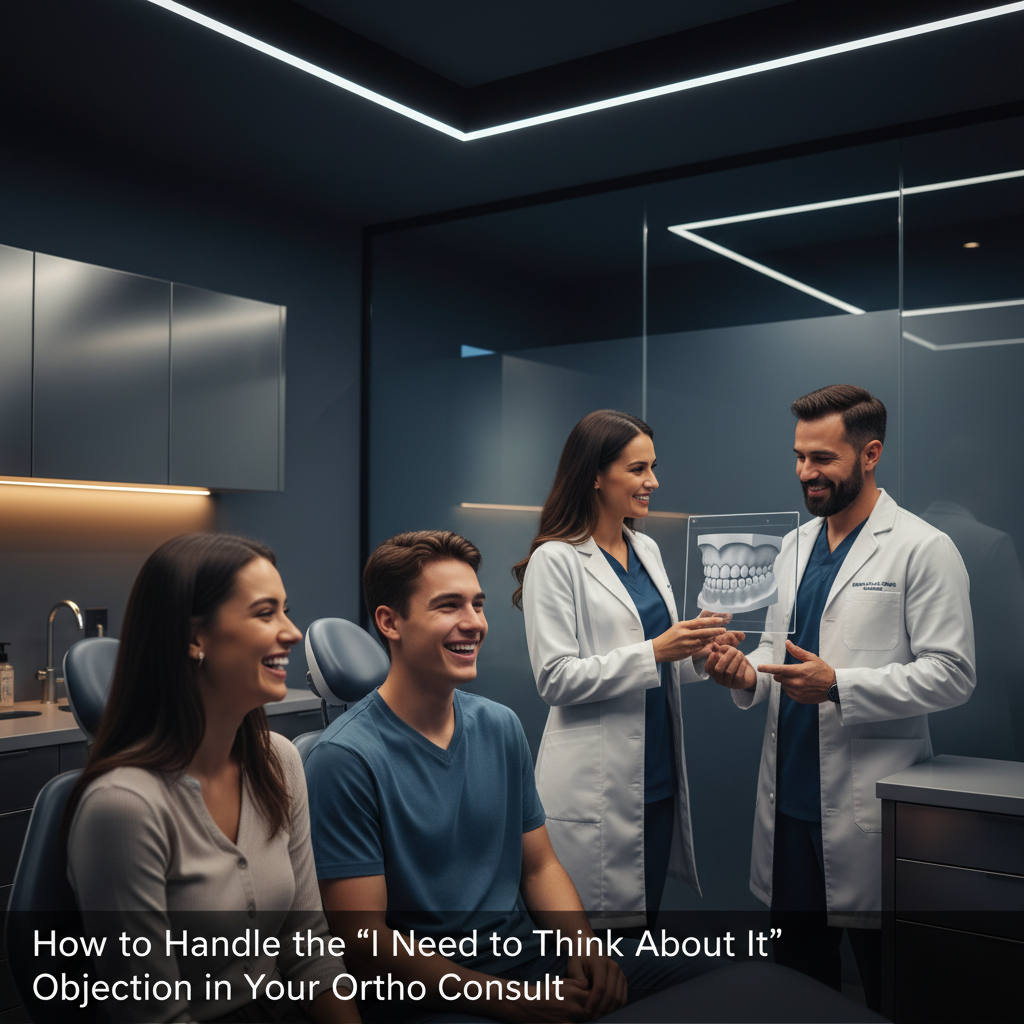
The moment a patient says, "I need to think about it," a subtle but significant shift occurs in your orthodontic consult. It's a phrase that often feels like a polite dismissal, leaving you wondering where the conversation went sideways and how to salvage the opportunity. This isn't just about closing a case; it's about understanding and addressing underlying concerns to help patients make the best decision for their oral health.
Understanding the "Think About It" Objection
When a patient hesitates, it's rarely a direct rejection of your clinical expertise or the value of orthodontics. More often, "I need to think about it" is a smokescreen for unvoiced concerns, a lack of clarity, or a perceived obstacle. It's a signal that something in your presentation didn't quite land, or that they have an internal hurdle they're not comfortable sharing yet. Effective orthodontic objection handling begins with recognizing this nuance.
One study found that 70% of sales opportunities are lost because salespeople fail to effectively address objections. While we're not "selling" in the traditional sense, the principle holds: unaddressed concerns lead to inaction. Our role isn't to push, but to uncover and resolve. This requires a shift from presenting information to facilitating a deeper conversation. We need to create an environment where patients feel safe to articulate their true hesitations, whether they're about cost, treatment duration, discomfort, or even a need for spousal approval.
Proactive Strategies: Preventing the Objection Before It Arises
The best way to handle the "I need to think about it" objection is to prevent it from surfacing in the first place. This involves a consultative approach that builds trust and addresses potential concerns throughout the entire patient journey, not just at the close.
1. Build Unshakeable Rapport and Trust Early
From the moment a patient walks in, every interaction should reinforce trust. This isn't just about being friendly; it's about active listening, empathy, and demonstrating genuine care. Our team ensures that patients feel heard and understood, not just processed. We ask open-ended questions about their concerns, their lifestyle, and their desired outcomes before we even discuss treatment options. This foundational trust makes patients more likely to voice concerns directly rather than retreating into a "think about it" shell. Research by Accenture indicates that 83% of consumers prefer to buy from companies that treat them like a person, not a number. This human-centric approach is paramount in orthodontics.
2. Educate, Don't Just Inform
There's a critical difference between informing a patient about their treatment and truly educating them. Informing is reciting facts; educating is helping them understand the why behind those facts and how it impacts them. We use visual aids, intraoral cameras, and simple analogies to explain complex concepts. We discuss the long-term benefits beyond aesthetics, such as improved oral hygiene, reduced wear on teeth, and prevention of future issues. When patients grasp the full scope of benefits and risks, their perceived value of treatment increases significantly. A well-informed patient is a confident patient.
3. Address Financial Concerns Transparently and Flexibly
Cost is almost always a factor, even if it's not the primary one. Many patients hesitate because they're unsure if they can afford treatment or if the payment options align with their budget. Instead of waiting for them to bring it up, we proactively discuss financial options. Our treatment coordinators are experts in outlining payment plans, insurance benefits, and third-party financing solutions. We present these options clearly and non-judgmentally. Data from a 2023 survey showed that 68% of patients are more likely to accept treatment if flexible payment options are clearly presented upfront. By removing financial ambiguity, we eliminate a major source of hesitation.
Reactive Strategies: Navigating the Objection When It Arises
Even with the best proactive measures, some patients will still say, "I need to think about it." When this happens, it's not a dead end; it's an invitation to dig deeper. This is where your orthodontic objection handling skills truly shine.
1. Acknowledge and Validate Their Statement
Never dismiss their need to think. Instead, acknowledge it with empathy. "I completely understand. This is a big decision, and it's important to feel comfortable with it." This validates their feelings and keeps the lines of communication open. Then, pivot to uncover the real reason.
2. Ask Probing Questions to Uncover the True Objection
This is the most crucial step. Your goal is to gently guide them to articulate what they're really thinking about. Use open-ended questions that invite them to share more.
- "When you say you need to think about it, what specifically comes to mind?"
- "What part of our conversation today would you like more clarity on?"
- "Is there anything that gives you pause about moving forward?"
- "Often, when people need to think, it's about X, Y, or Z (e.g., finances, time commitment, speaking with a spouse). Does any of that resonate with you?"
Listen intently to their response. Their answer will tell you exactly what you need to address. It might be a concern about the treatment timeline, a fear of discomfort, or a need to discuss it with a partner.
"The 'I need to think about it' objection is rarely about the treatment itself. It's almost always about an unaddressed fear, a perceived obstacle, or a lack of clarity on how the treatment fits into their life."
3. Reframe and Re-educate Based on Their Specific Concern
Once you've identified the true objection, address it directly and empathetically. If it's about cost, reiterate the value proposition and explore payment options again. If it's about time, discuss the efficiency of modern orthodontics or the long-term benefits of early intervention. If they need to talk to a spouse, offer to provide materials or even schedule a brief follow-up call with both of them.
For example, if a patient says, "I'm worried about how long it will take," you might respond: "That's a very common concern, and I appreciate you sharing it. Many patients are surprised by how efficient modern orthodontic treatment can be. We're often able to achieve significant results in [X months/years], and the long-term benefits of a healthy, aligned smile far outweigh that initial investment of time. What specific timeline were you hoping for, and how might we make this work for you?" This approach demonstrates your commitment to effective orthodontic objection handling.
The Follow-Up: Nurturing the Relationship
If a patient still needs time, respect that. Provide them with a clear, concise summary of their treatment plan, financial options, and your contact information. Schedule a specific follow-up call or email. "I'll give you a call next Tuesday to see if you have any further questions." This shows you're proactive and available, without being pushy.
Remember, the goal isn't to force a decision, but to empower patients to make an informed one. By understanding the nuances of the "I need to think about it" objection and employing both proactive and reactive strategies, you'll not only increase case acceptance but also build stronger, more trusting relationships with your patients. This level of comprehensive orthodontic objection handling ensures better outcomes for everyone involved.
Ready to transform your case acceptance rates and elevate your practice? Discover how the ION Growth Engine can streamline your patient journey and empower your team with advanced strategies. Book a strategy call today at iongrowth.ai to explore a tailored approach for your orthodontic practice.