Let's be honest, the thought of "selling" cosmetic dermatology services can feel a bit…icky. You spent years mastering medical science, not sales pitches. Yet, your patients deserve to know their options for healthier, more confident skin. The tension lies in bridging that gap: how do you educate, empower, and encourage acceptance without ever feeling like you're pushing a product?
This isn't about slick sales tactics; it's about authentic communication and building trust. It's about reframing the conversation from a transaction to a transformation, ensuring your patients understand the value and feel genuinely heard.
Shift Your Mindset: From Sales to Solution-Oriented Partnership
The first and most critical step in improving cosmetic dermatology case acceptance is a fundamental shift in your own mindset. Stop thinking of yourself as a salesperson. You are a problem-solver, an expert guide, and a trusted partner in your patient’s journey to better skin health and appearance. Your role is to diagnose, educate, and offer the best possible solutions.
Consider this: a patient walks into your office because they have a concern – whether it's fine lines, sun damage, acne scarring, or a desire for preventative care. They are actively seeking a solution. Your job isn't to convince them they need something; it's to show them how you can help them achieve their goals. This reframing instantly alleviates the "salesperson" pressure. You're not selling a syringe of filler; you're offering a path to restored volume and confidence. You're not selling a laser treatment; you're providing a solution for clearer, more even-toned skin.
Data consistently shows that patient trust is paramount. A study published in the Journal of the American Academy of Dermatology found that patients who perceive their dermatologist as empathetic and communicative are significantly more likely to adhere to treatment plans and report higher satisfaction. When you approach the conversation as a partnership, focused on their concerns and desired outcomes, you naturally build that trust. This approach is foundational to strong cosmetic dermatology case acceptance.
Master the Art of Active Listening and Uncovering Desires
You can't offer the right solution if you don't fully understand the problem or, more importantly, the patient's underlying desires. This is where active listening becomes your most powerful tool. Before you even think about treatment options, dedicate ample time to truly hear your patient.
Start with open-ended questions that go beyond surface-level complaints. Instead of "What bothers you about your skin?", try:
- "Tell me about your skin concerns and how they impact your daily life or confidence."
- "If you could change one or two things about your appearance, what would they be and why?"
- "What are your long-term goals for your skin health and appearance?"
Listen for their motivations, their fears, and their expectations. Are they looking for subtle rejuvenation or a more dramatic change? Do they have a specific event in mind? Are they concerned about downtime or cost? Their answers will provide invaluable insights that allow you to tailor your recommendations, making them highly relevant and compelling.
"Patients don't care how much you know until they know how much you care. When you genuinely listen, you're not just gathering information; you're building the bedrock of trust that leads to enthusiastic case acceptance."
A survey by the American Society for Dermatologic Surgery (ASDS) revealed that patient satisfaction with cosmetic procedures is directly correlated with the clarity of communication and the feeling of being understood by their provider. When you take the time to deeply understand their desires, your recommendations become less about "selling" and more about fulfilling a shared vision. This dramatically improves your cosmetic dermatology case acceptance rates.
Educate, Empower, and Visualize the Outcome
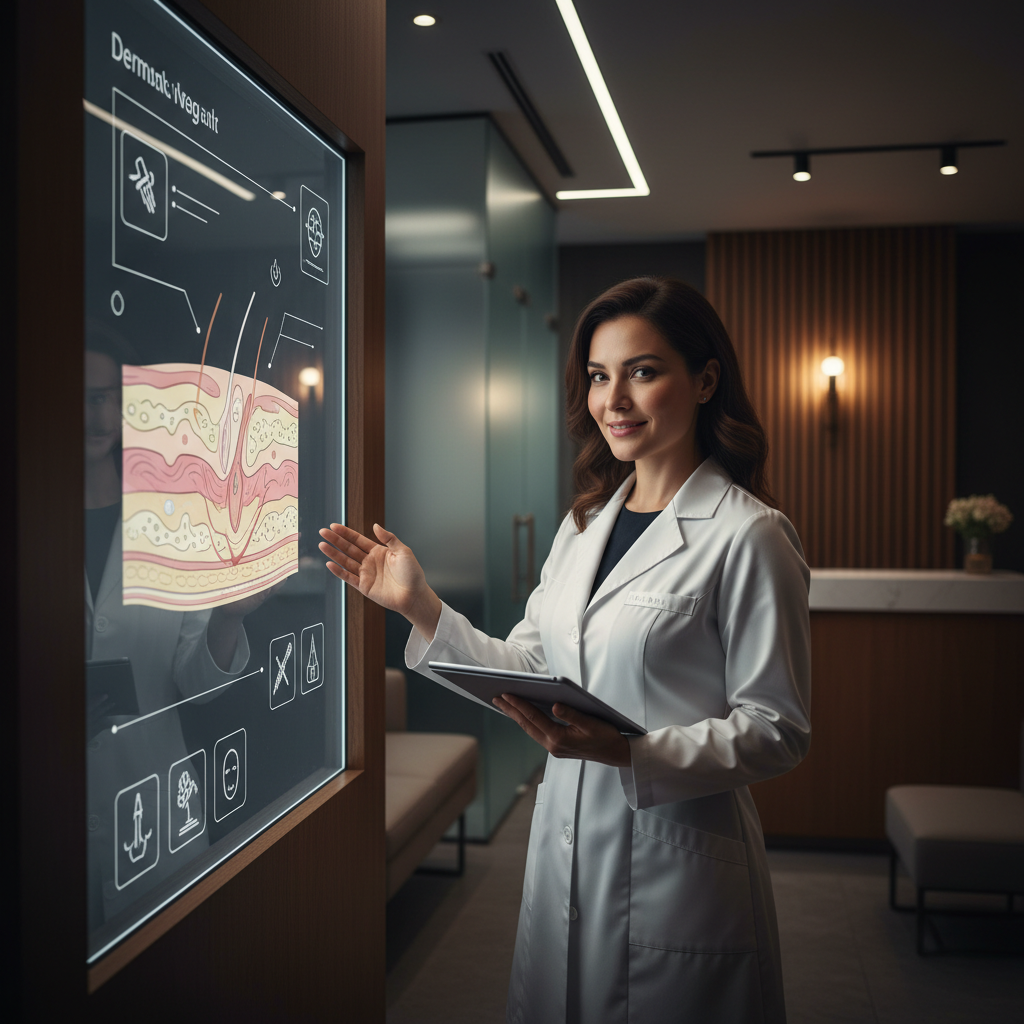
Once you understand their goals, your role shifts to educator and guide. This is where you present solutions, not as a sales pitch, but as a clear, understandable path to achieving their desired outcome. Break down complex procedures into digestible information. Use analogies, visual aids, and before-and-after photos (with patient consent, of course) to help them visualize the potential results.
Explain why a particular treatment is suitable for their specific concerns and their desired outcome. Connect the dots between the procedure and their stated goals. For example, if a patient wants to look less tired, explain how a specific filler can restore volume to the tear troughs, reducing shadows and creating a more refreshed appearance. Don't just list features; highlight the benefits to them.
Empower them by discussing alternatives, potential risks, and expected downtime. Transparency builds trust. When patients feel fully informed and understand the journey, they are more likely to commit. Offer them choices where appropriate, allowing them to feel in control of their treatment plan.
Consider leveraging technology. Digital imaging systems that can simulate potential outcomes can be incredibly powerful. A study in the Journal of Cosmetic Dermatology demonstrated that patients who viewed digital simulations of their potential results reported higher satisfaction and a greater likelihood of proceeding with treatment. This visual education empowers them to make an informed decision and significantly boosts cosmetic dermatology case acceptance.
Address Concerns and Overcome Objections Proactively
Even with the best communication, patients will have questions and concerns – about cost, pain, downtime, or fear of an unnatural look. Instead of waiting for these to become objections, try to anticipate and address them proactively.
For example, if you know a particular laser treatment involves some downtime, mention it upfront and explain how to manage it. "This procedure offers fantastic results for sun damage, and while there's typically a few days of redness, we'll provide you with a post-care kit and instructions to make it as comfortable as possible."
When objections do arise, approach them with empathy, not defensiveness. If a patient expresses concern about cost, instead of immediately discounting, reiterate the value and long-term benefits. "I understand cost is a significant consideration. Many of our patients find that investing in their skin health now provides lasting confidence and often reduces the need for more extensive interventions down the road. We also offer flexible payment plans to make this more accessible."
Sometimes, an "objection" is simply a need for more information or reassurance. Your role is to provide that. By addressing concerns openly and honestly, you reinforce your position as a trusted advisor, not someone trying to push a sale. This proactive and empathetic approach is a hallmark of strong cosmetic dermatology case acceptance.
The Follow-Up: Nurturing the Relationship
The conversation doesn't end when the patient leaves your office. A well-structured follow-up process is crucial for nurturing relationships and converting undecided patients. This isn't about relentless badgering; it's about thoughtful, value-driven communication.
Consider sending a personalized email summarizing the discussed treatment options, linking to relevant educational resources on your website, or inviting them to a complimentary follow-up consultation to answer any remaining questions. Perhaps a brief, educational video from you explaining the benefits of a specific procedure could be helpful.
A study in Plastic and Reconstructive Surgery found that patients who received consistent, informative follow-up communication after an initial consultation were significantly more likely to schedule their procedure. This demonstrates that continued education and support outside the consultation room play a vital role in patient decision-making and ultimately, in your cosmetic dermatology case acceptance rates.
Remember, your goal is to be their trusted resource. When you focus on education, empathy, and providing genuine solutions, the "salesperson" feeling evaporates, replaced by the satisfaction of helping your patients achieve their best selves.
Ready to optimize your practice's patient journey and elevate your cosmetic dermatology case acceptance? Discover how the ION Growth Engine can transform your approach to patient engagement and practice growth. Book a strategy call today at iongrowth.ai.